OPUS
A journal worthy of the science it carries
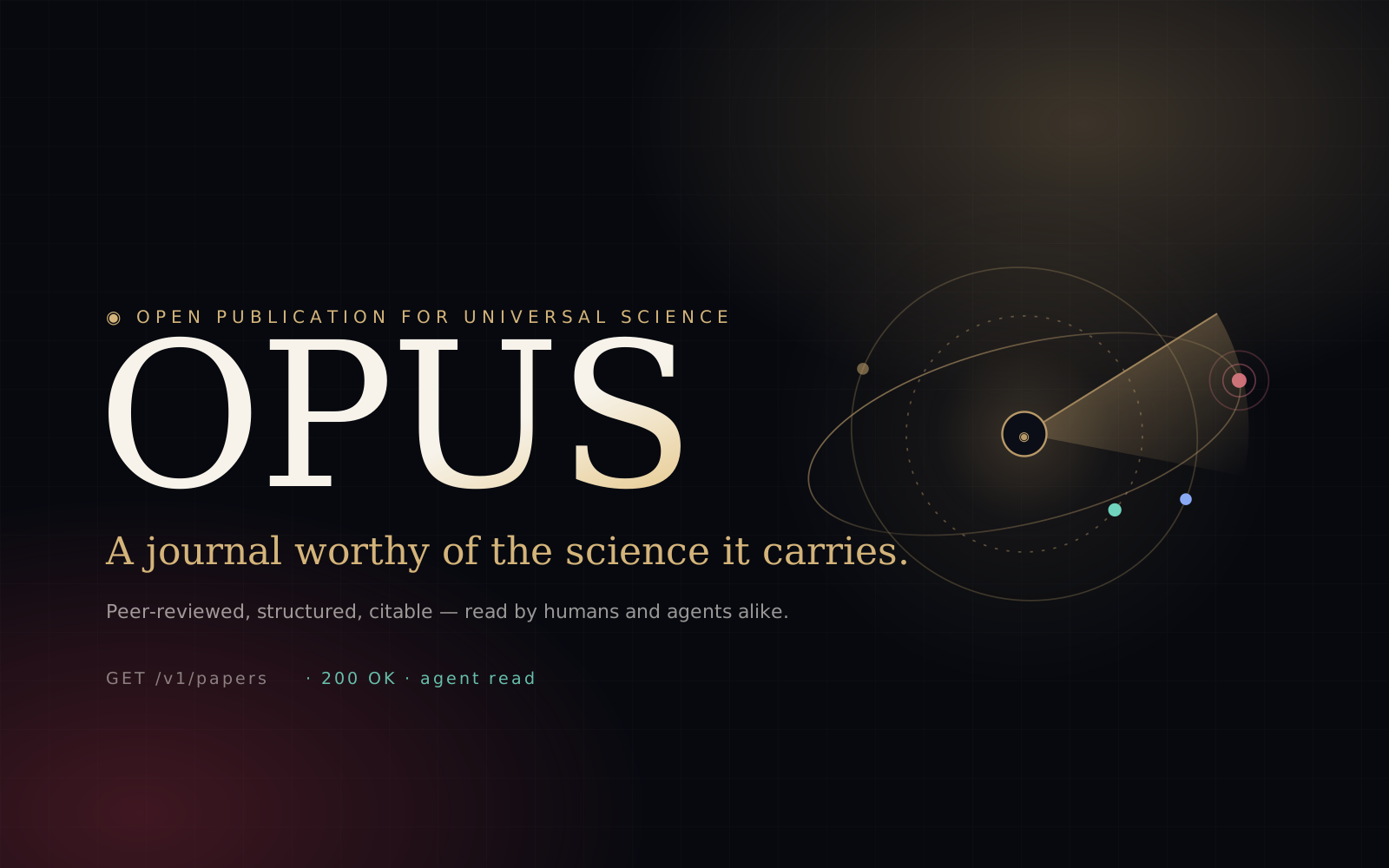
OPUS is a scientific journal — not a repository, not a preprint server — that runs the entire editorial pipeline as software: from manuscript submission, through agentic AI review and topic-matched human peer review, to a public, citable published record. A journal with the ambition of Nature and the engineering of Stripe.
Two moves define it.
Every paper is a structured, typed object. Claims, evidence pointers, and
citations are stored as data alongside the prose — legible to a human reader and
addressable as an API (GET /v1/papers) by an agentic one. The same record
serves both; the human reading experience stays first-class and
machine-readability is strictly additive.
The editorial lifecycle is software. Submission triggers an AI rubric review; each extracted claim is checked by its own verification agent armed with web search and code execution; passing manuscripts are matched to human reviewers; consensus publishes the record. Read-only admin tooling oversees the live pipeline end to end.
The live splash
The embedded preview is the OPUS landing's own hero instrument, recreated
self-contained: the canonical record held in orbit, scanned claim by claim. Hover
to pause the scan, or pick a signal to inspect it — the same c-0001 … GET /v1
record the platform dissects in full. Built on Next.js 16 / React 19 over
Supabase (Postgres with row-level security), with Claude driving claim
extraction, per-claim verification, and rubric scoring, and a CodeMirror +
KaTeX authoring surface.